
Bitcoin Reclaims Ground Above $67,000 — But Caution Rules the Market
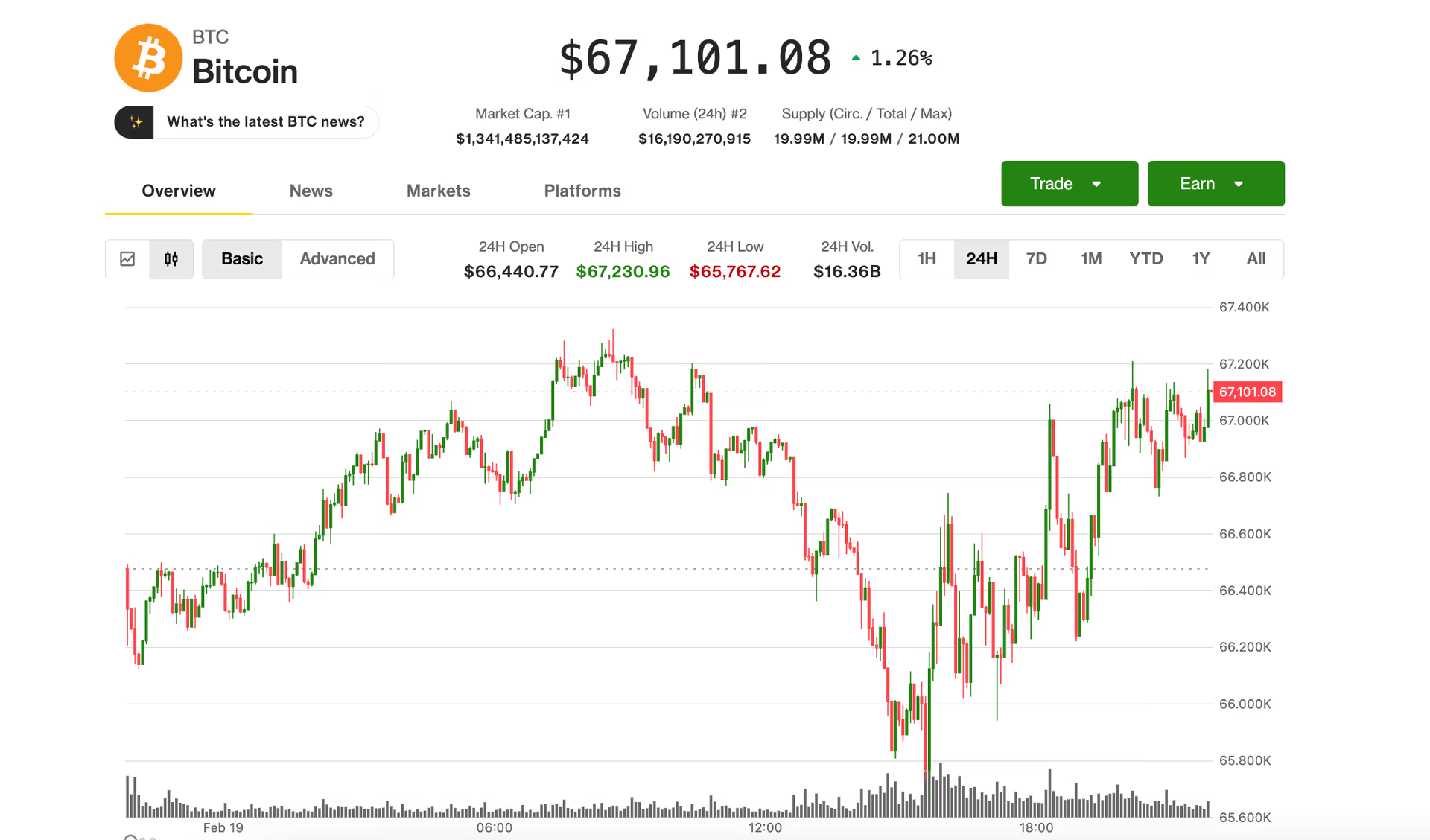
After a brief dip below $66,000 during early Thursday trading in the United States, Bitcoin managed to claw back above a key technical threshold, settling around $67,428 — a gain of roughly 1% over the previous 24 hours. While that stabilization offered some relief, it was far from a confident recovery. The mood across crypto markets remained guarded, with most major altcoins — including Ethereum, XRP, BNB, Dogecoin, and Solana — trading flat or slightly in the red during the same window.
The broader CoinDesk 20 Index underperformed Bitcoin’s modest rebound, reflecting lingering hesitation among investors who appear unwilling to rotate into higher-risk digital assets until there is more clarity on both macro and regulatory fronts.
Crypto-adjacent equities told a different story, at least partially. Bitcoin mining stocks CleanSpark and MARA each posted gains of around 6%, bucking a mild pullback in traditional equity benchmarks. The S&P 500 slipped 0.3% and the Nasdaq 100 fell 0.6%, suggesting that risk appetite in mainstream markets was also under pressure.
Why BTC Price Stability Remains Fragile: The ETF Loss Problem
One of the more striking data points circulating among traders on Thursday came from Jake Ostrovskis, Head of OTC at Wintermute, a major crypto trading firm. According to Ostrovskis, the average cost basis for U.S. Bitcoin ETF investors currently sits near $84,000. With Bitcoin trading roughly 20% below that level, a significant portion of ETF holders are sitting on unrealized losses — and that creates a structural vulnerability.
When a large pool of investors is underwater on a position, the risk of “capitulation selling” rises — a scenario in which holders, losing patience or confidence, begin exiting en masse, which in turn pushes prices down further and triggers more selling. That feedback loop is what traders are quietly preparing for.
Importantly, though, total ETF holdings remain within approximately 5% of their all-time peak in Bitcoin terms. That suggests institutional players are making selective, measured reductions to their exposure rather than heading for the exits all at once — a meaningful distinction that tempers the worst-case scenario, at least for now.
Crypto Derivatives Signal Defensive Positioning Around Current BTC Levels
The nervousness visible in spot markets is being mirrored — and amplified — in the derivatives space. Ostrovskis noted that many traders are currently buying downside protection, essentially purchasing options contracts that pay off if Bitcoin falls further. At the same time, those same traders are limiting their upside participation, meaning they are willing to forgo gains from a potential rally in exchange for a safety net beneath current prices.
In plain terms: traders are paying for insurance. That posture reflects a market that is not yet convinced the worst is over, even as prices have stabilized temporarily.
This kind of defensive positioning is common in periods of elevated uncertainty and typically precedes one of two outcomes — either a genuine relief rally that forces short-sellers to cover, or a continued grind lower that eventually triggers the capitulation event traders are hedging against.
Crypto Regulatory Progress and Industry Stress Paint a Mixed Picture
On the policy side, there were modest signs of forward movement. White House-hosted discussions between crypto industry figures and banking representatives produced what sources described as incremental progress on the digital asset market structure bill — though no formal compromise has been reached. The talks signal continued engagement between Washington and the crypto industry, even if meaningful legislation remains some distance away.
Meanwhile, stress fractures from the recent price downturn continue to emerge. Chicago-based crypto lender Blockfills is reportedly exploring a sale after absorbing a $75 million lending loss during the market’s recent slide. The firm had temporarily halted client deposits and withdrawals last week, raising alarms among market watchers who are closely monitoring for signs of broader contagion.
So far, the damage appears contained. That is both reassuring and, paradoxically, slightly concerning. In 2022, the collapse of Celsius and FTX created a brutal washout that ultimately cleared the market of excess leverage and set the foundation for the 2023–2025 bull run. The current cycle has not yet produced a comparable clearing event — which means the recovery, if and when it comes, may lack the same explosive energy that followed that earlier capitulation.
Macro Headwinds Compound Bitcoin’s Uncertain Price Outlook
Beyond the crypto-specific risks, two external forces are making investors particularly reluctant to add exposure right now.
The first is stress in private credit markets. Shares of Blue Owl Capital fell around 6% on Thursday after the firm permanently restricted redemptions from its $1.7 billion retail-oriented private credit fund. The move rattled confidence across the private credit sector, pulling shares of Apollo Global, Ares Capital, and Blackstone down by more than 5% each. When financing conditions tighten in private markets, risk assets broadly tend to suffer, and crypto is no exception.
The second overhang is geopolitical. The possibility of U.S. military action against Iran continues to linger, contributing to a 2.8% rally in crude oil, which pushed above $66 per barrel to reach its highest level since August. Rising oil prices add inflationary pressure and complicate the Federal Reserve’s path — a combination that historically weighs on speculative assets like Bitcoin.
U.S. Commodity Futures Trading Commission — regulatory body overseeing crypto derivatives markets
CoinDesk 20 Index — real-time altcoin performance tracking







Leave a Reply