
Here’s the rewritten article with a fresh structure, tone, and examples:
A Green Beret Turned $33,000 Into $400,000 — By Betting on a Mission He Was Already Part Of
A decorated Special Forces soldier now faces federal charges after allegedly using his advance knowledge of a classified military operation to cash in on prediction market bets — and then scrambling to cover his tracks once the press caught wind of the windfall.
The Big Picture
When U.S. forces moved to detain former Venezuelan president Nicolás Maduro, one of the men involved in planning and executing that very mission had already placed his bets. Master Sergeant Gannon Ken Van Dyke, a Green Beret stationed at Fort Bragg, now stands accused of turning insider knowledge into a six-figure payday — a move federal prosecutors are calling straightforward criminal insider trading.
How It Unfolded
According to an indictment unsealed by the Department of Justice, Van Dyke opened a Polymarket account on December 26, 2025 — days before the operation — and proceeded to place 13 separate wagers totaling $33,000. The bets weren’t vague: they targeted specific outcomes, including whether U.S. troops would set foot in Venezuela, whether Maduro would be removed, and whether a full-scale military incursion would occur. After the operation played out largely as predicted, Van Dyke walked away with roughly $400,000 in winnings.
Think of it this way: it’s the equivalent of an NFL coach betting heavily on the exact plays his own team would run in the Super Bowl — except the stakes involve national security and classified military intelligence.
The Charges
Van Dyke faces multiple federal counts, including:
- Unlawful use of confidential government information for personal financial gain
- Theft of nonpublic government information
- Fraud
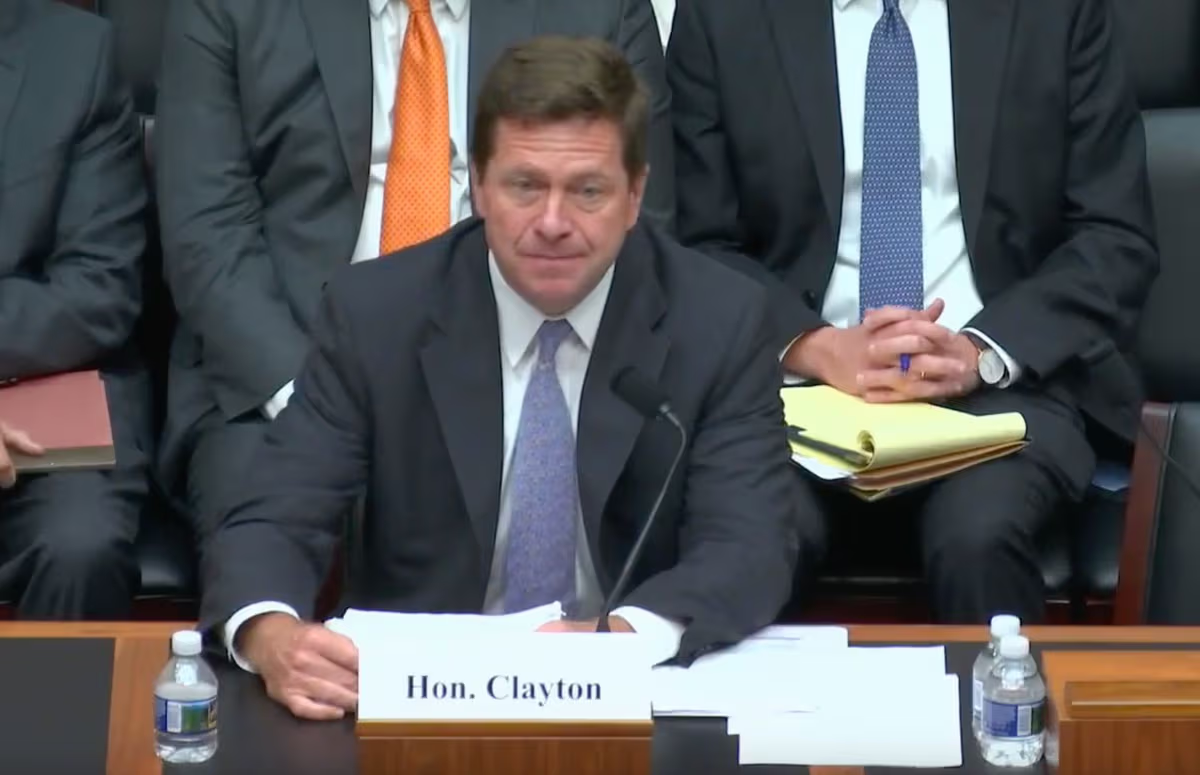
U.S. Attorney Jay Clayton didn’t mince words: “The defendant allegedly violated the trust placed in him by the United States Government by using classified information about a sensitive military operation to place bets on the timing and outcome of that very operation, all to turn a profit. That is clear insider trading and is illegal under federal law.”
The Cover-Up Attempt
The unusually large profits on those Polymarket contracts had already drawn attention from journalists before law enforcement got involved publicly. Sensing the heat, Van Dyke allegedly asked Polymarket to delete his account and swapped out his registered email address in an attempt to erase his digital footprint.
It didn’t work. Polymarket cooperated with investigators. In a post on X, the platform stated that upon identifying a user trading on classified government information, it referred the matter to the DOJ and assisted with the investigation.
Van Dyke had also moved quickly to launder the trail of the money itself — converting his winnings into a bridged form of USDC stablecoin, routing them into what the filing describes as a foreign cryptocurrency “vault,” and then gradually funneling the funds into a conventional brokerage account.
A Second Front: The CFTC
Running parallel to the criminal case, the U.S. Commodity Futures Trading Commission filed its own insider trading complaint in federal court. CFTC Chairman Mike Selig framed the breach in stark terms: “The defendant was entrusted with confidential information about U.S. operations and yet took action that endangered U.S. national security and put the lives of American service members in harm’s way.”
Trump Weighs In
When reporters asked President Donald Trump about the case, he used it as a jumping-off point to express broader skepticism about prediction markets. “The whole world, unfortunately, has become somewhat of a casino,” he said. “I was never much in favor of it. I don’t like it conceptually.” Trump also said he would look into reports of federal employees using nonpublic information to place prediction market bets more broadly.
Van Dyke remains an active-duty soldier. The charges against him have not resulted in a conviction, and he is presumed innocent unless proven guilty in a court of law.




Leave a Reply