Bitcoin’s Potential Plunge to $10K Could Signal US Recession, Warns Bloomberg Strategist

Bloomberg Intelligence strategist Mike McGlone is sounding the alarm on cryptocurrency markets, suggesting that weakening digital asset prices could be an early warning sign of broader financial turbulence ahead.

McGlone’s concerns center on bitcoin potentially sliding toward $10,000—a dramatic 85% drop from recent levels—as multiple risk indicators flash warning signals across traditional and digital markets.

The Case for Caution

In a Monday post on X, McGlone outlined several converging factors that suggest the post-2008 “buy the dip” era may be reaching its conclusion:

The U.S. stock market capitalization relative to GDP has hit levels not seen in roughly a century, indicating extreme valuations. Meanwhile, equity volatility remains remarkably subdued, with 180-day volatility in both the S&P 500 and Nasdaq 100 sitting at eight-year lows—a combination that historically precedes market corrections.

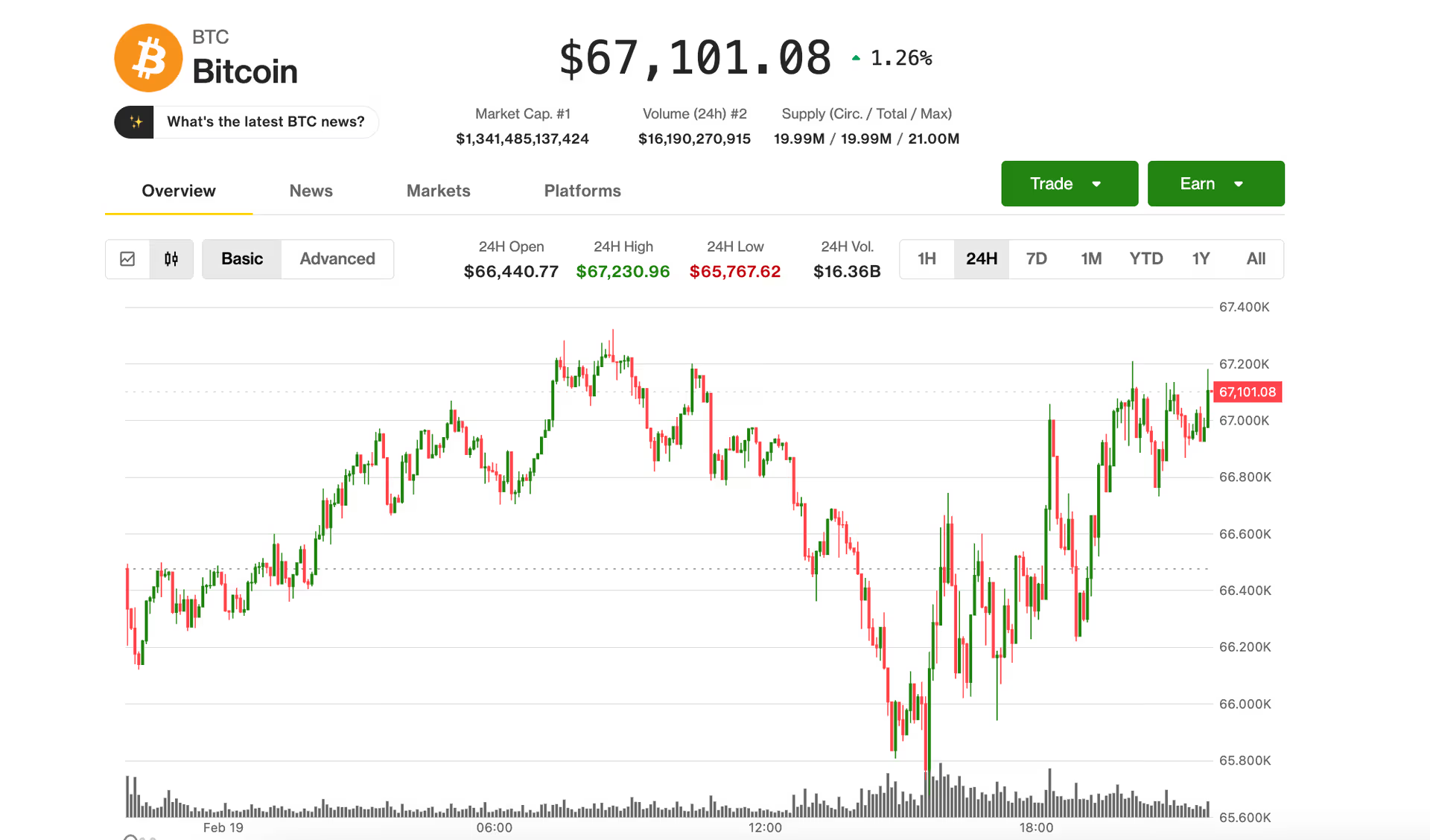
After recovering to $70,841 on February 15 from $65,395 just days earlier, bitcoin was trading around $68,800 by mid-morning Monday. The broader cryptocurrency market reflected similar weakness, with 85 of the top 100 tokens posting losses. Privacy-focused coins monero and zcash declined 10% and 8% respectively over 24 hours.

“Healthy Correction is what we should hear soon from stock market analysts (who risk unemployment if not onboard), following collapsing cryptos,” McGlone wrote. “The buy the dips mantra since 2008 may be over.”

Trump Euphoria Fading, Gold Rising

McGlone characterized the current environment as a “crypto bubble” that’s “imploding,” noting that “Trump euphoria” appears to have peaked and is now contributing to contagion effects across markets.

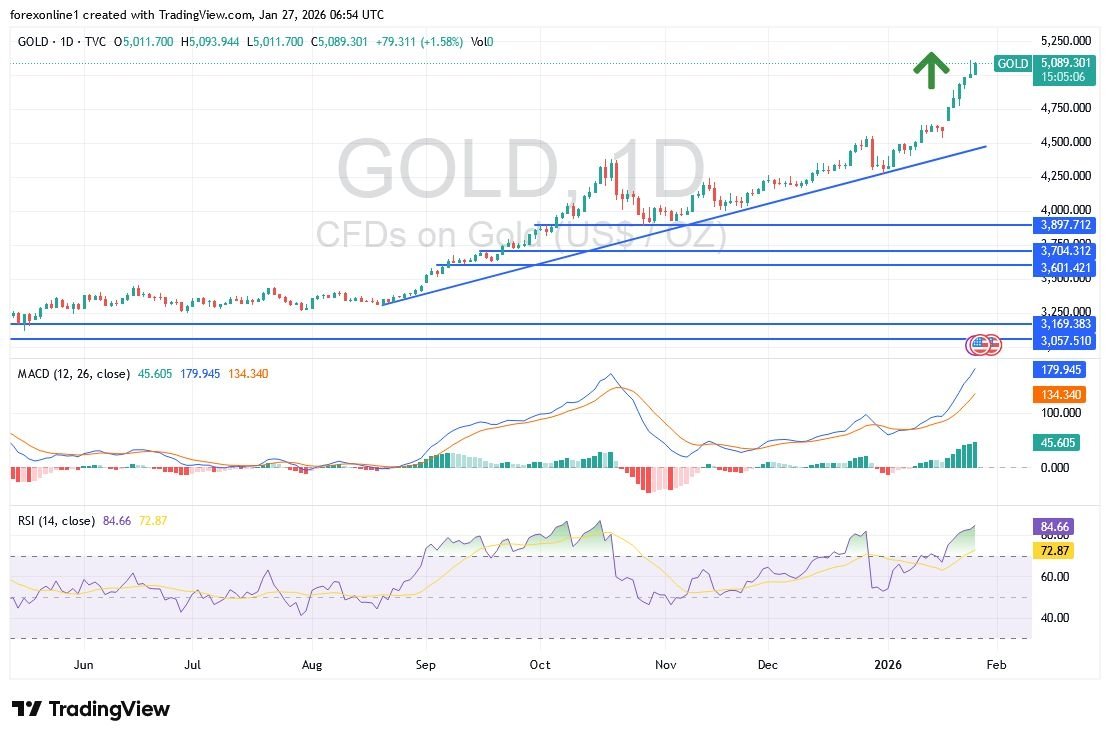
In contrast, precious metals are surging. Gold and silver are “grabbing alpha” at rates last witnessed roughly 50 years ago, with rising volatility that McGlone believes could eventually spread into equity markets.

Using a scaled comparison chart that divides bitcoin by 10, McGlone showed both bitcoin and the S&P 500 hovering below 7,000 as of February 13. He argues that “volatile and beta-dependent” bitcoin is unlikely to maintain levels above that threshold if broader equity market weakness materializes.

The strategist identified 5,600 on the S&P 500—equivalent to approximately $56,000 for bitcoin under his scaling methodology—as an initial “normal reversion” level. His base case scenario envisions bitcoin ultimately reverting toward $10,000, contingent on a peak forming in U.S. equity markets.

A Contrarian View

Not everyone shares McGlone’s dire outlook. Jason Fernandes, co-founder of AdLunam and market analyst, pushed back against the Bloomberg strategist’s thesis, arguing it relies on flawed assumptions.

“That’s false equivalence and single-path bias,” Fernandes told CoinDesk. “Markets can also resolve excess through time, rotation, or inflation erosion. A macro slowdown could mean consolidation or a $40,000 to $50,000 reset, not a systemic unwind to $10,000.”
Fernandes emphasized that a genuine move toward $10,000 bitcoin would require catastrophic conditions: sharp liquidity contraction, widening credit spreads, forced deleveraging across investment funds, and a disorderly equity market drawdown.

“That implies recession plus financial stress, not just slower growth,” he explained. “Absent a credit shock or policy mistake that drains global liquidity, that kind of collapse remains a low-probability tail risk.”

The debate highlights the uncertainty facing investors as traditional market valuations stretch historical norms while cryptocurrency markets struggle to maintain momentum following their recent rally.